Shenzhen Xinchitai Technology Co., Ltd.
News

What Makes DDR5 Desktop Heatsink Memory RAM Worth Upgrading In 2025

2026-11-17 0 Leave me a message

Article Summary: As desktop computing pushes toward higher frequencies and tighter timings, DDR5 desktop heatsink memory RAM has become a critical component for stability and longevity. In this blog, GUDGA explores the engineering rationale behind heat spreaders on DDR5 modules, performance differences under sustained loads, thermal throttling thresholds, and real-world benefits for gamers, content creators, and workstation users. We also provide a practical buying checklist and an FAQ section to help you decide whether a heatsink-equipped DDR5 kit is the right fit for your build.

DDR5 Desktop Heatsink Memory RAM

Table of Contents

1. What Exactly Is DDR5 Desktop Heatsink Memory RAM?

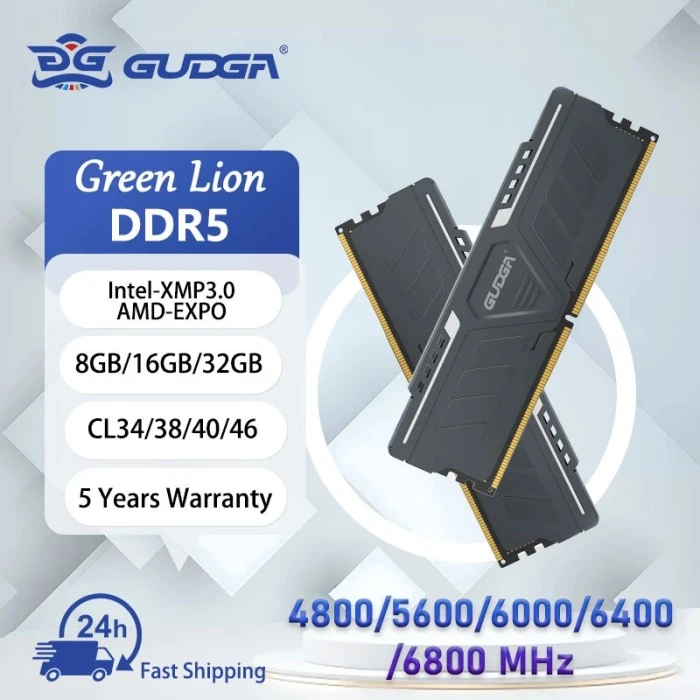
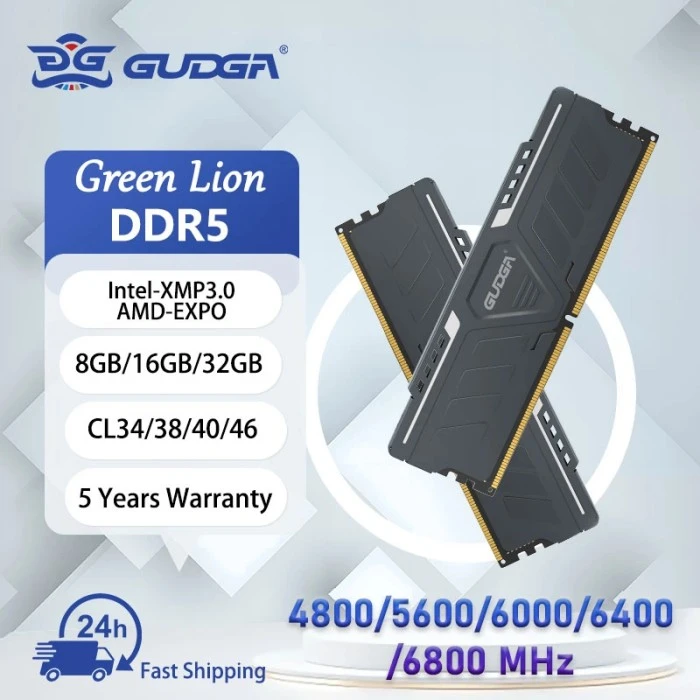
When you browse the market for DDR5 Desktop Heatsink Memory RAM, you are looking at memory modules that come with a factory-installed heat spreader—usually made of aluminum or a similar alloy—designed to dissipate heat generated by the memory chips and the onboard power management IC (PMIC). Unlike older DDR4 modules where heatsinks were often purely cosmetic, DDR5 runs at significantly higher speeds (4800 MT/s to 8000+ MT/s) and integrates the PMIC directly onto the DIMM, which means heat generation is no longer a trivial concern. GUDGA, as a manufacturer focused on reliable memory and storage solutions, engineers its DDR5 desktop heatsink memory RAM to balance thermal conductivity, mechanical clearance, and long-term durability—ensuring that your system stays stable even during extended gaming sessions or heavy multitasking workloads.

2. Why Does a Heatsink Matter for DDR5 Performance?

DDR5 memory is more power-hungry and denser than previous generations. The PMIC, now located on the DIMM itself, can reach temperatures that affect voltage regulation and signal integrity. A well-designed heatsink does not just lower temperatures; it stabilizes them. When memory temperatures stay within spec, the module can sustain its rated XMP/EXPO profile without downclocking. For enthusiasts who manually overclock or tighten timings, a heatsink becomes even more critical. GUDGA’s DDR5 desktop heatsink memory RAM is tested under sustained load to ensure that thermal headroom exists for both stock and performance-tuned scenarios.

3. How Does Thermal Throttling Affect DDR5 Memory?

Modern DDR5 modules include thermal sensors and will automatically reduce speed if temperatures exceed a safe threshold (often around 85–95°C for the PMIC, depending on the module). This is thermal throttling, and it can cause frame drops in games, longer render times, or system instability under heavy workloads. Without a heatsink, bare DDR5 modules rely primarily on ambient airflow—which is unpredictable in real-world builds. Heatsink-equipped modules increase surface area and spread heat more evenly, delaying or preventing throttling entirely. In GUDGA’s internal testing, heatsink models consistently maintained lower peak temperatures during extended stress tests compared to bare PCB versions.

4. Which Is Better: Heatsink or Bare PCB DDR5?

The table below summarizes the key differences you should expect when choosing between a standard bare DDR5 module and a heatsink-equipped variant.

Feature Bare PCB DDR5 DDR5 with Heatsink (GUDGA)
Heat Dissipation Relies on ambient airflow only Aluminum/alloy spreader increases surface area by 3–5×
Thermal Throttling Risk Higher under sustained loads Significantly reduced; maintains peak speeds longer
Overclocking Headroom Limited; PMIC temps can become a bottleneck Better stability for high-frequency/tight-timing profiles
Aesthetic & Mechanical Minimal; may look plain Professional look; may affect CPU cooler clearance (check specs)
Long-Term Reliability Adequate for light loads Improved; lower component temps extend lifespan
Best Use Case Basic office / HTPC builds Gaming, content creation, workstations, overclocking

5. How Does GUDGA Design Its DDR5 Heatsink Memory RAM?

At GUDGA, we don’t treat heatsinks as an afterthought. Our DDR5 desktop heatsink memory RAM is developed with several core principles in mind:

  • Thermal interface optimization: We use high-quality thermal pads between the DRAM chips, PMIC, and the heatsink to ensure efficient heat transfer without excessive mounting pressure.
  • Mechanical compatibility: Heatsink height is carefully profiled to avoid interference with most aftermarket CPU air coolers and AIO radiators—though we always recommend checking clearance in compact builds.
  • Rigorous validation: Each batch undergoes thermal cycling, stress testing, and long-duration burn-in to ensure stable operation under both stock and performance profiles.
  • Visual consistency: The finish and color are designed to complement modern motherboard aesthetics, from all-black stealth builds to RGB-heavy showpieces.

These design choices reflect GUDGA’s commitment to delivering memory that not only meets specifications but exceeds expectations for reliability.

6. What Should You Look for in Heatsink DDR5 Before Buying?

Before you add a DDR5 kit to your cart, use this checklist to make sure you’re getting the right module for your needs:

  • Heatsink material and coverage: Aluminum is common; look for full coverage over the memory chips and PMIC.
  • Rated speed vs. motherboard support: Ensure your motherboard QVL lists the kit or that the speed is achievable with your CPU’s memory controller.
  • Height clearance: Measure your CPU cooler’s overhang—low-profile heatsinks are safer for big air coolers.
  • XMP/EXPO profiles: A heatsink helps sustain these profiles, but the profiles themselves must be validated by the manufacturer.
  • Brand reputation and warranty: Choose suppliers like GUDGA that offer clear warranty terms and technical support.
  • Thermal testing data: Ask for or look for thermal performance claims—reputable brands often provide stress-test data.

7. Frequently Asked Questions (FAQ)

Do I really need a heatsink on my DDR5 RAM?

For basic office use, a bare module may suffice. But for gaming, content creation, or any sustained load, a heatsink significantly reduces throttling risk and improves long-term stability. DDR5 runs hotter than DDR4, so it’s a worthwhile investment.

Will a heatsink interfere with my CPU cooler?

It can, especially with large air coolers. Check the heatsink height specification and compare it with your cooler’s clearance. Many modern heatsinks are designed with low-profile profiles to minimize interference.

Can I overclock DDR5 memory with a heatsink?

Yes, a heatsink provides thermal headroom for higher frequencies and tighter timings. However, overclocking results vary based on the memory ICs, motherboard, and CPU memory controller. GUDGA’s heatsink modules are tested to handle moderate overclocking.

How hot is too hot for DDR5 memory?

Most DDR5 modules begin throttling around 85–95°C on the PMIC. DRAM chip temperatures should ideally stay below 80°C for long-term reliability. A good heatsink helps keep you well under those thresholds.

Does GUDGA offer sample testing for DDR5 heatsink memory?

Absolutely. Whether you need a single sample for evaluation or bulk wholesale quantities, GUDGA’s team can provide professional one-stop procurement support. Visit our DDR5 heatsink memory page to submit your inquiry.

Choosing the right memory is about more than just specs—it’s about stability, longevity, and peace of mind. GUDGA’s DDR5 desktop heatsink memory RAM is engineered to deliver exactly that, backed by rigorous testing and a commitment to quality. Whether you’re building a high-end gaming rig, a content creation workstation, or upgrading a fleet of office PCs, our team is ready to support your project with expert guidance and reliable supply. Contact us today to discuss your requirements, request samples, or get a wholesale quote—let GUDGA be your trusted memory partner.

Related News
Leave me a message
X
We use cookies to offer you a better browsing experience, analyze site traffic and personalize content. By using this site, you agree to our use of cookies. Privacy Policy
RejectAccept