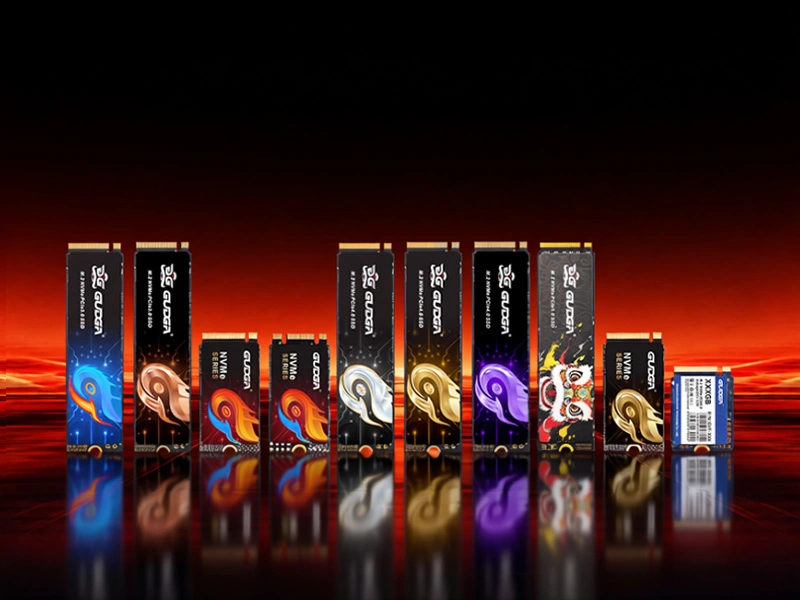
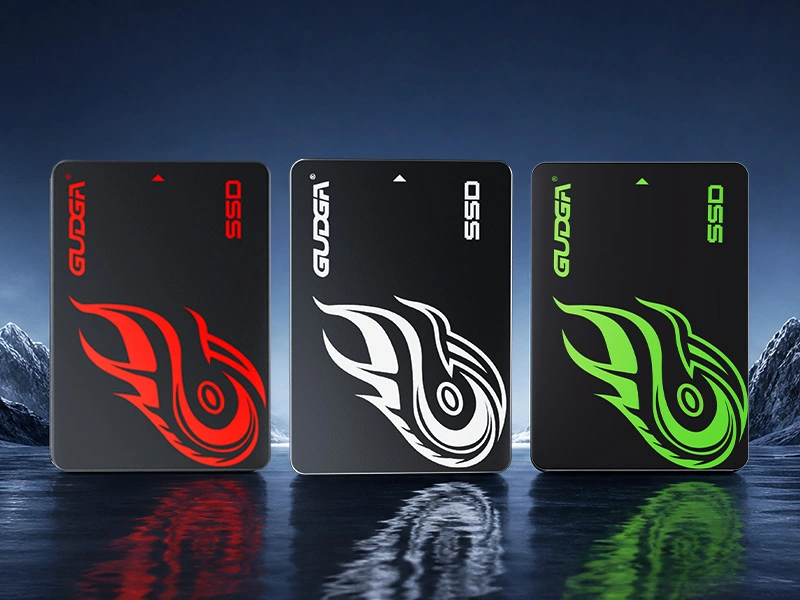
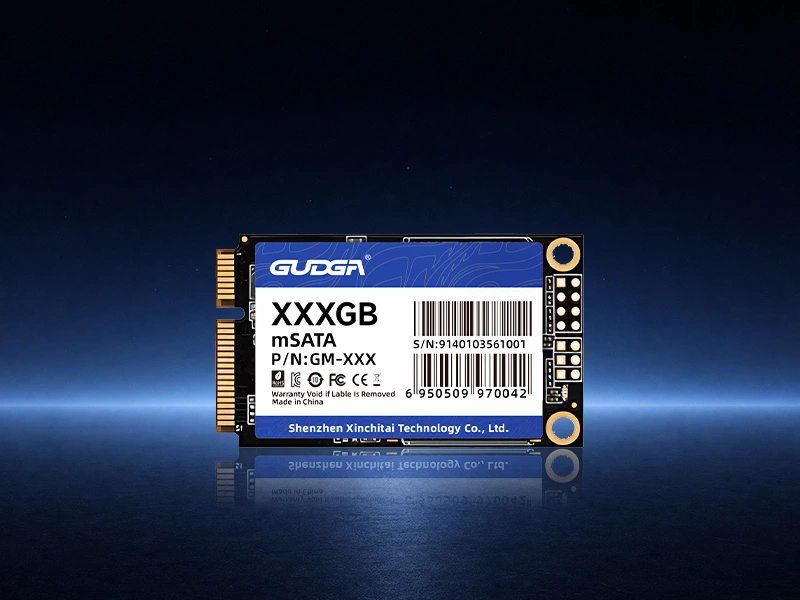
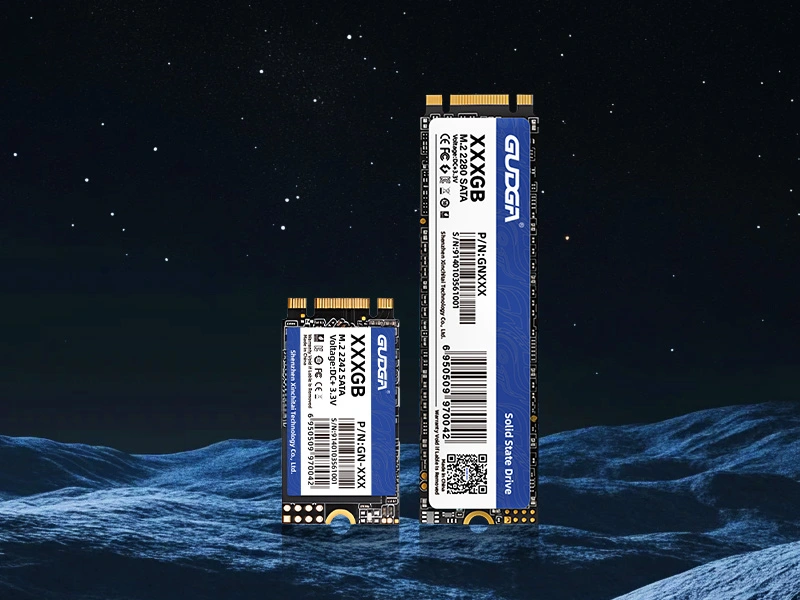
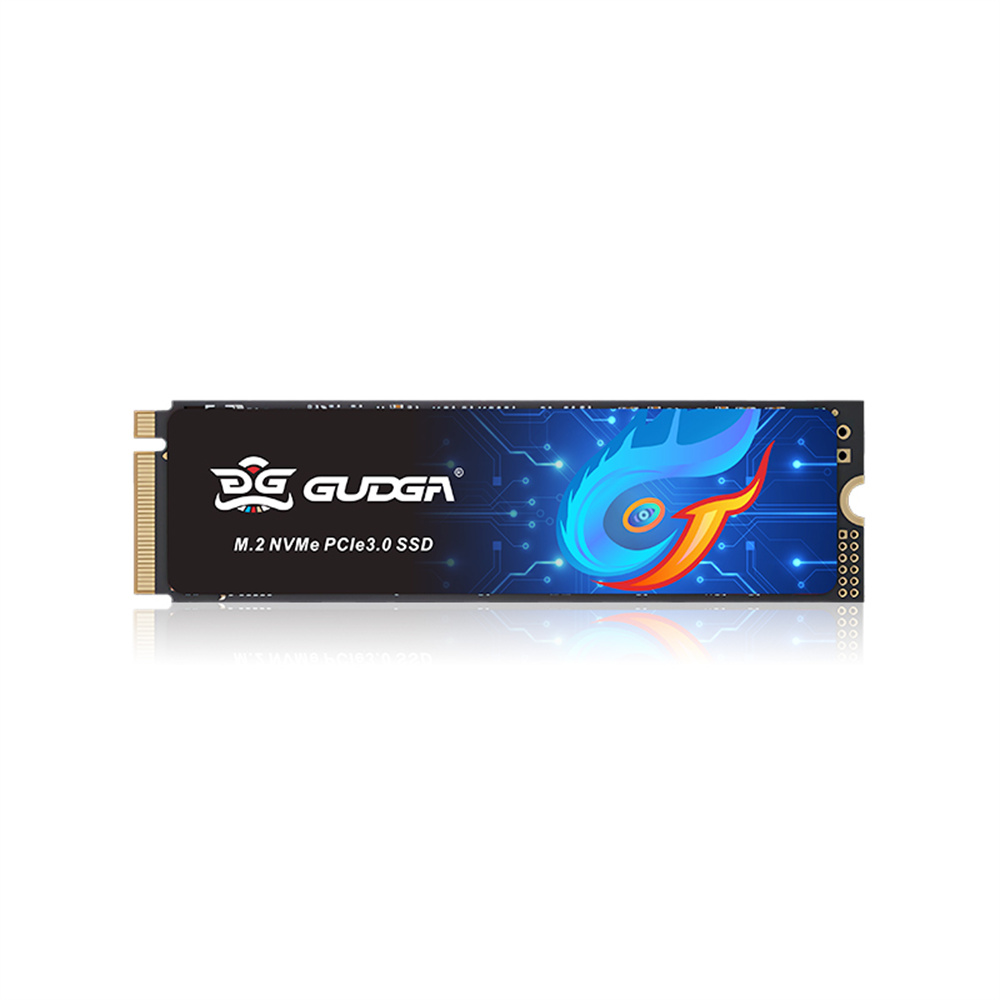
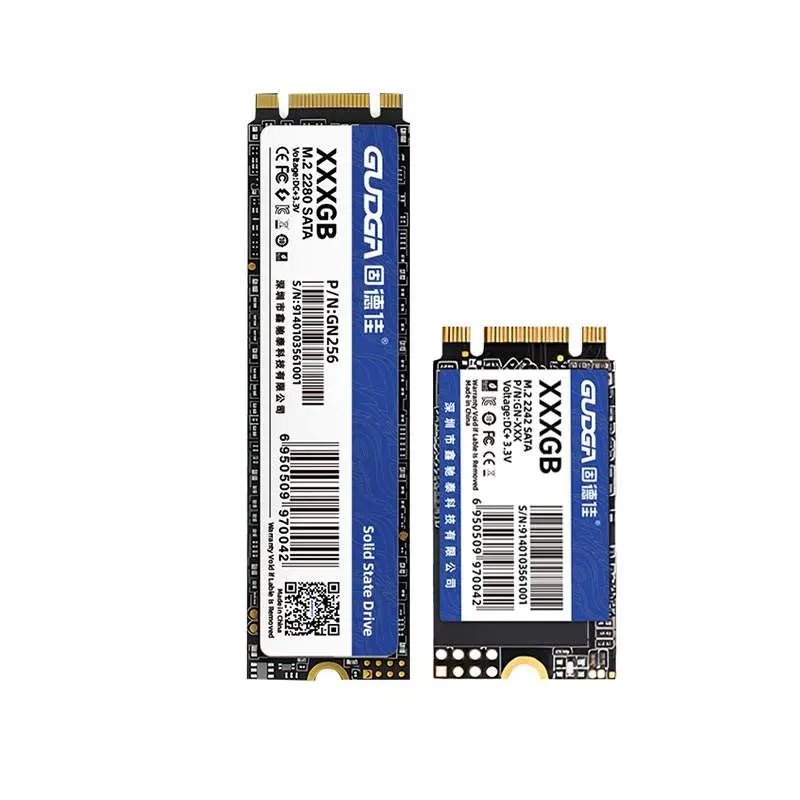
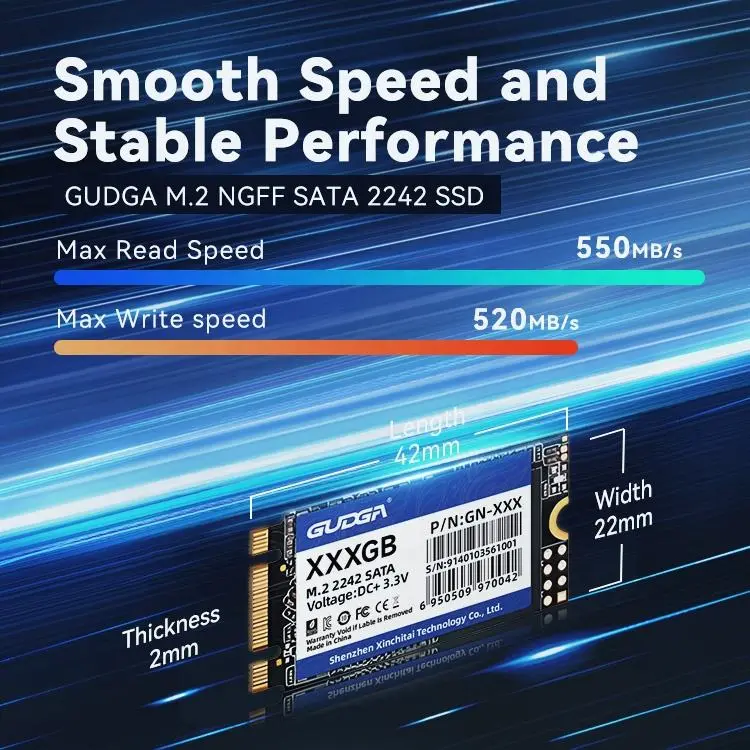
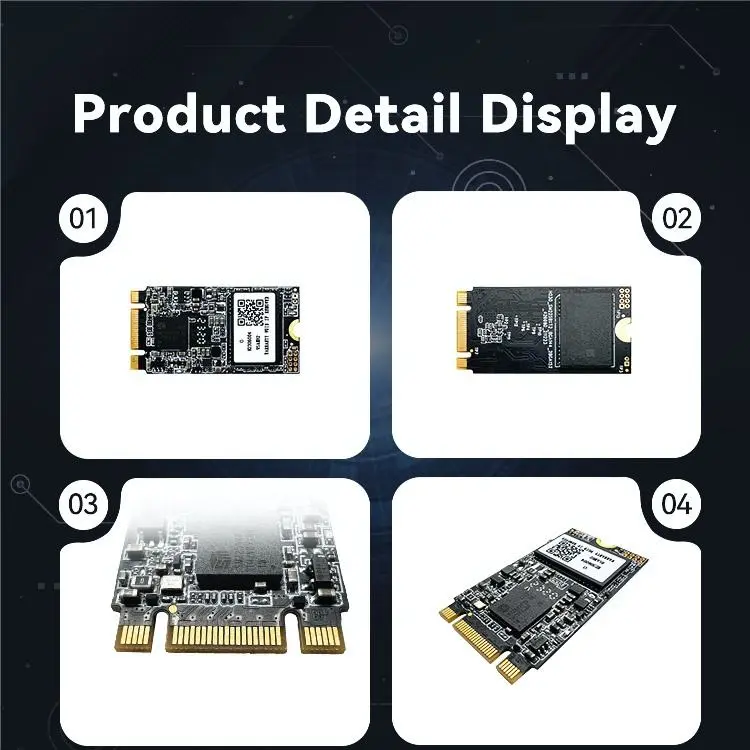
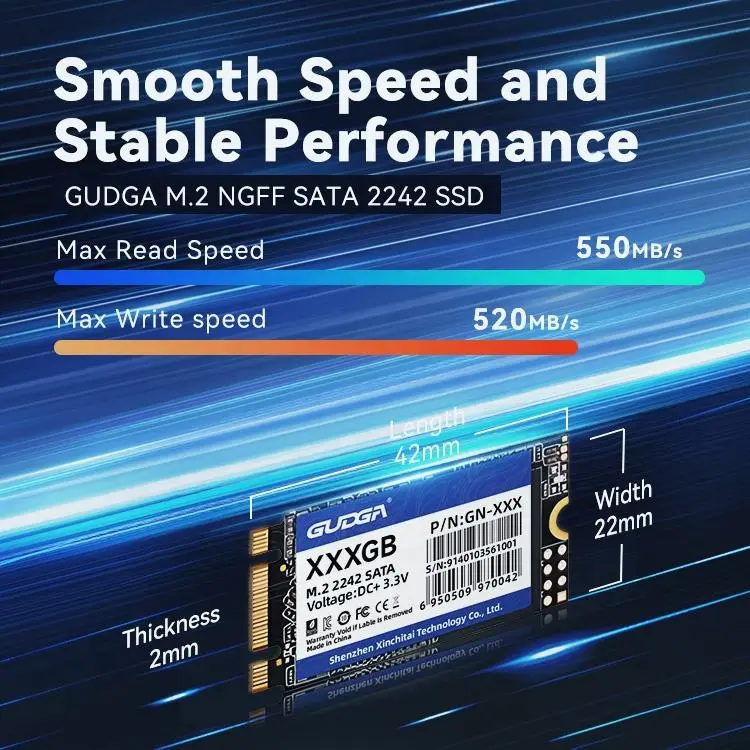
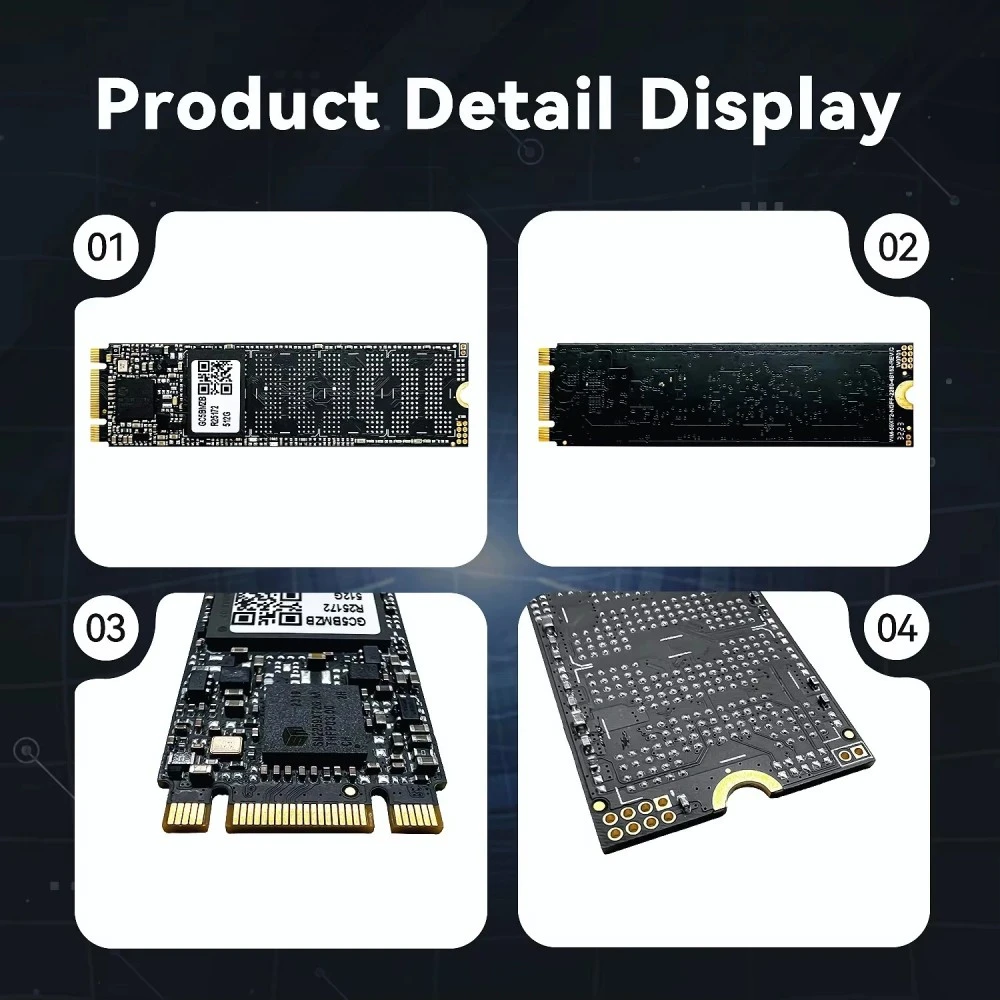
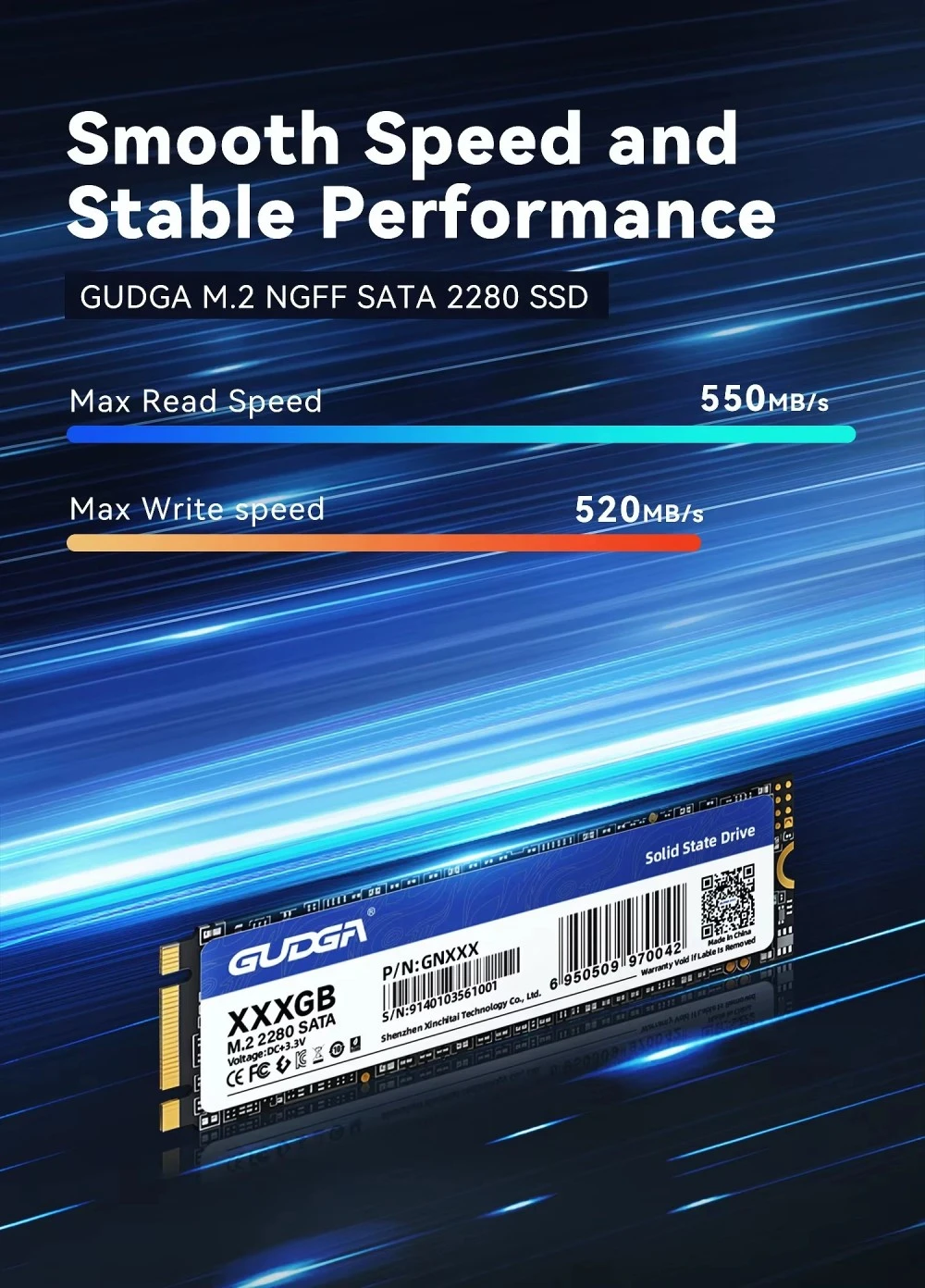
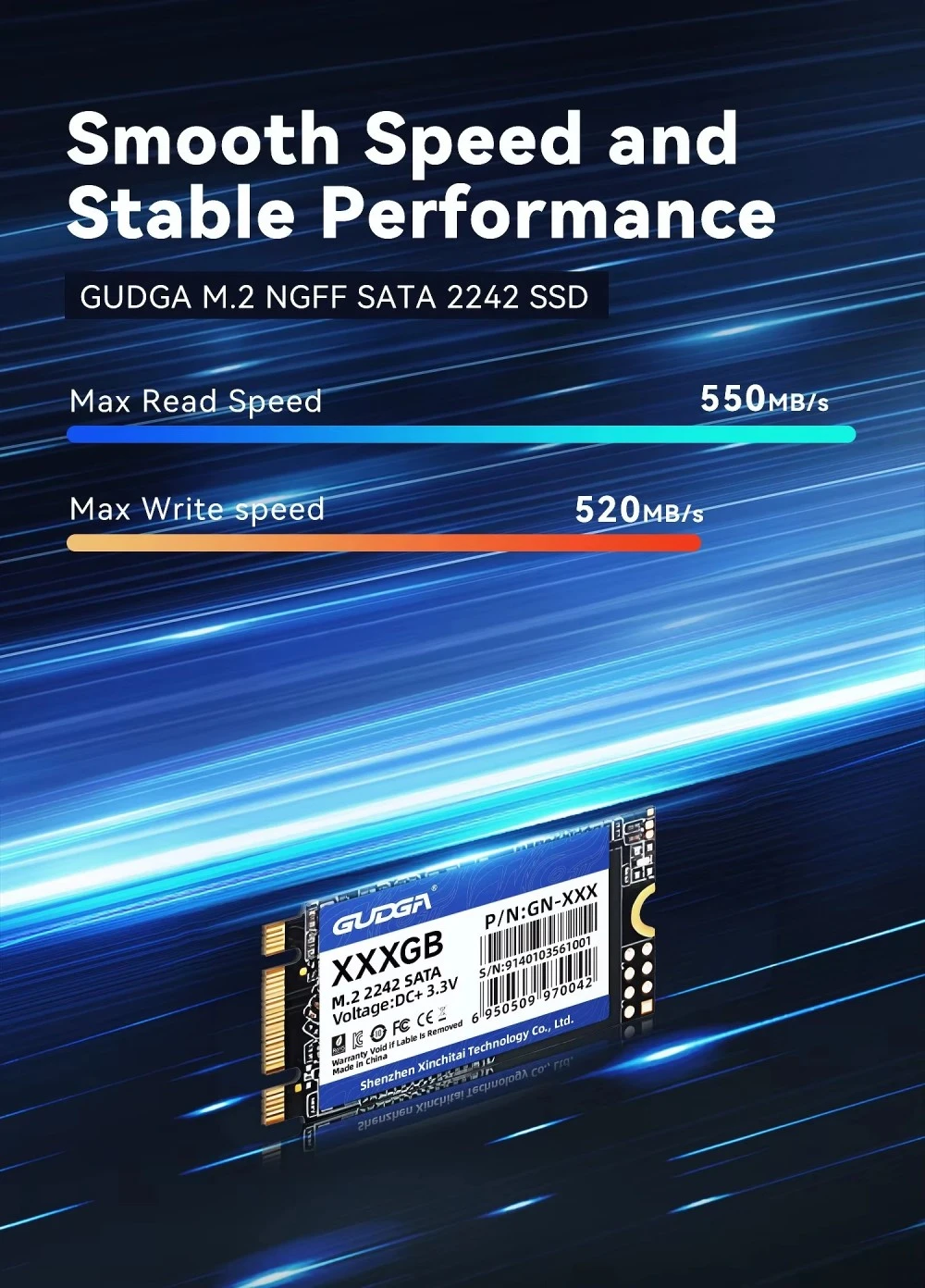
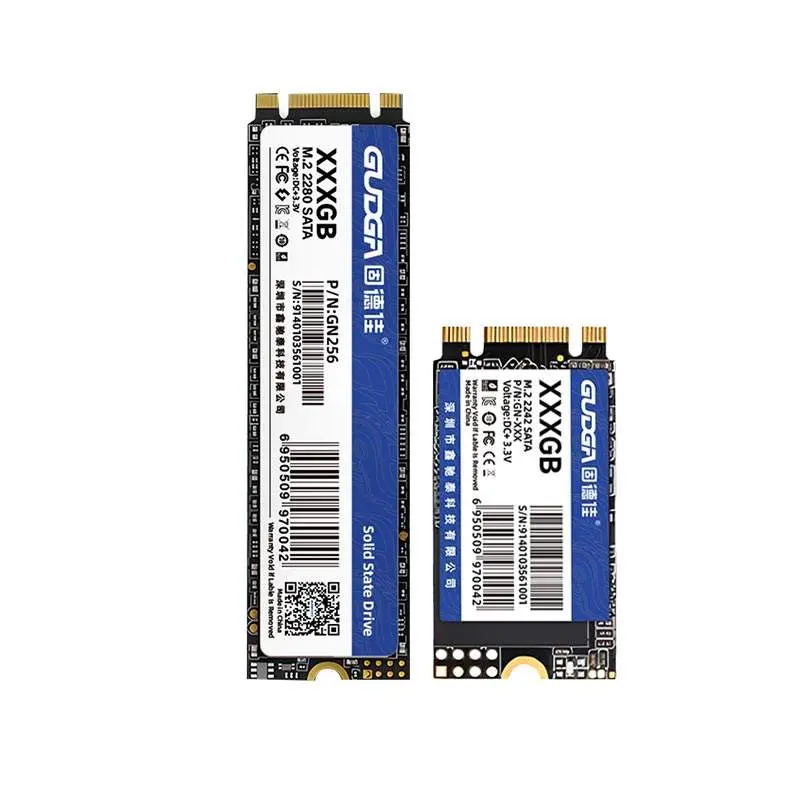
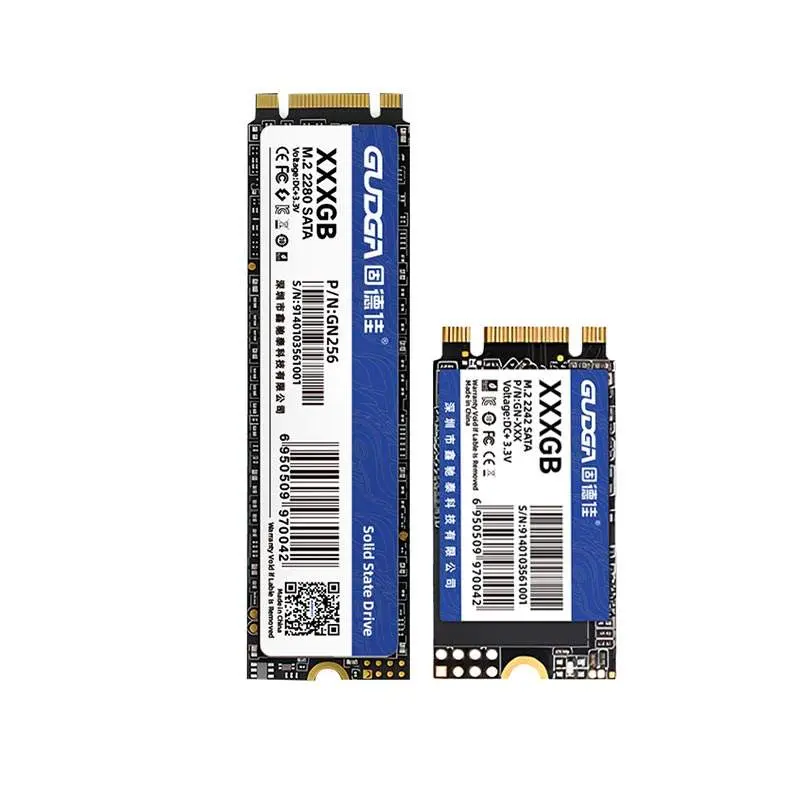
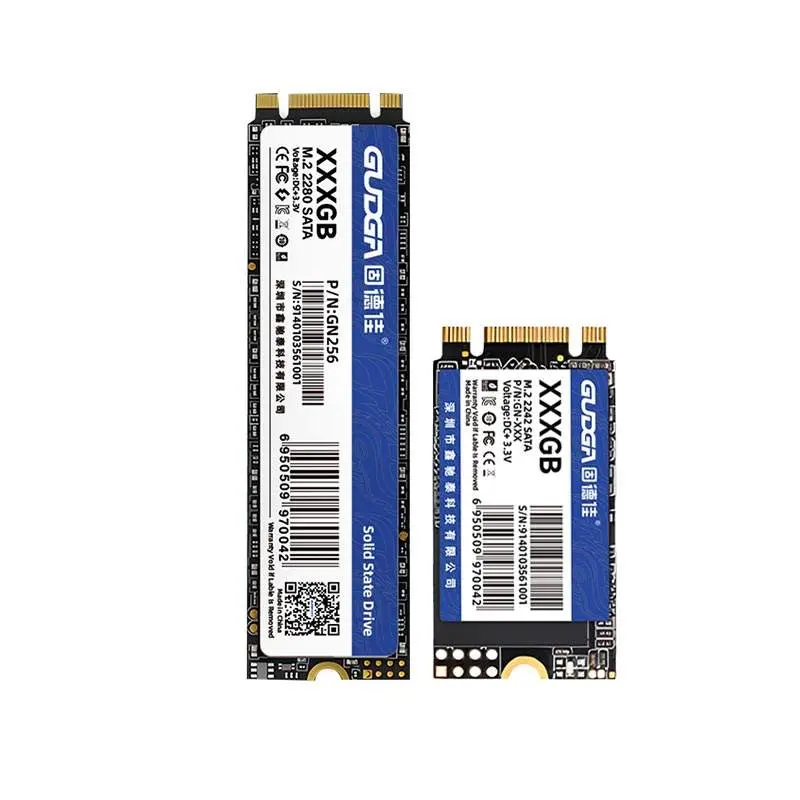
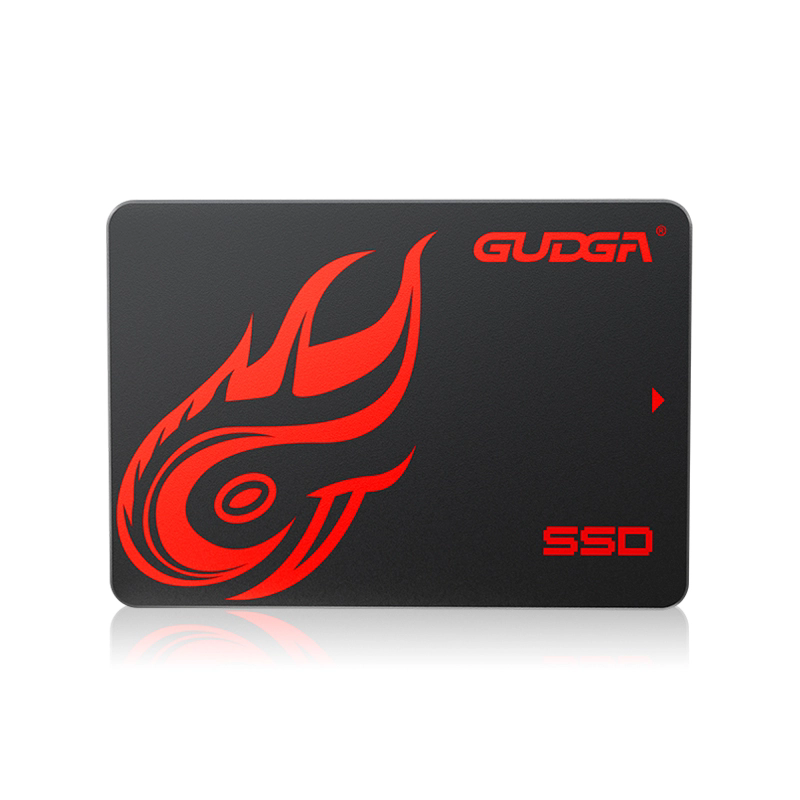
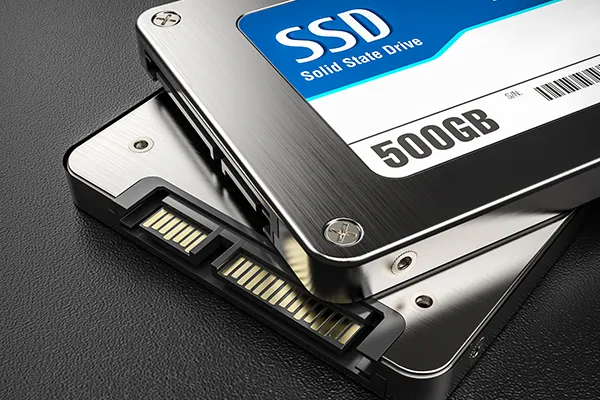
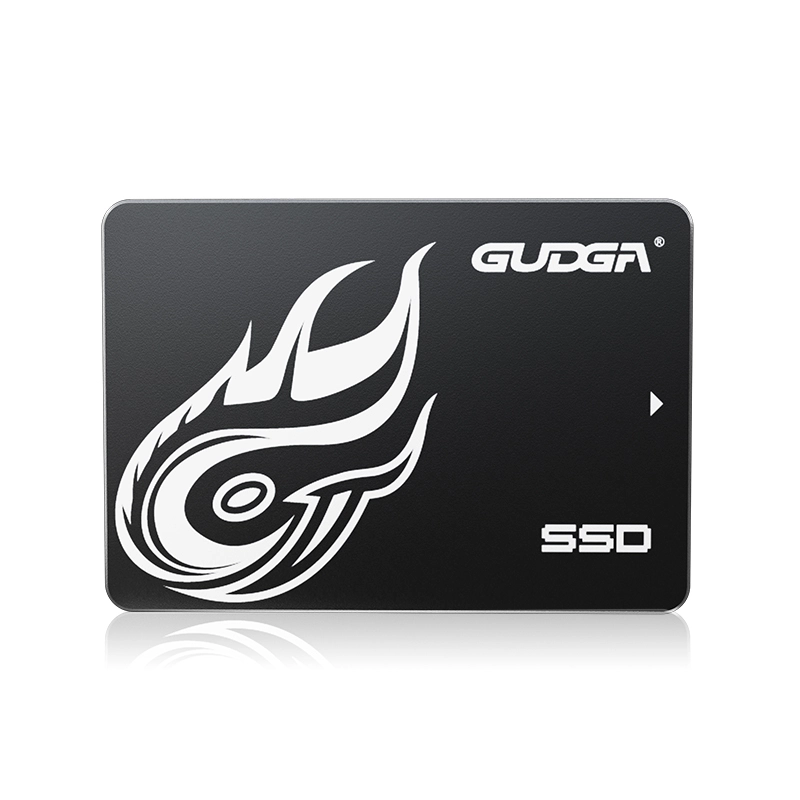
As a professional storage manufacturer and supplier in China, GUDGA focuses on the industrial and consumer storage sectors. This M.2 2242 SATA SSD is a highly stable storage solution tailored for bulk purchases, upgrading of old equipment, and customizations for compact terminals. Relying on the mature SATA III protocol, industrial-grade protection techniques, and strict factory inspections, it offers advantages such as 560MB/s high-speed read and write speeds, ultra-low power consumption, shock resistance and durability, and multi-system compatibility. It comes with a 5-year warranty and is a cost-effective and reliable choice for upgrading office, industrial control, surveillance, and lightweight laptops.
Our M.2 2242 SATA SSD departs from the redundant design of traditional solid-state drives. It focuses on practicality, stability, and compatibility, and has been deeply optimized to address the industry pain points such as limited equipment expansion in the market, sluggishness of old computers, unstable data in industrial equipment, and excessive power consumption of devices. It is equipped with the mature and stable SATA III 6Gbps transmission protocol, coupled with high-quality 3D NAND flash memory and dual-core controller, balancing the four core capabilities of ultra-fast read and write, long-lasting durability, low power consumption and energy saving, and multiple data protection. At the same time, it has undergone full-dimensional quality control including thousands of wear resistance tests, 48-hour bad block detection, and high and low pressure fluctuation tests, and is compatible with both consumer and industrial scenarios. Whether it is for personal user device upgrades, or for factories, enterprises, or batch purchasing, it can provide stable, long-lasting, and worry-free storage experiences.
Niche Technical Parameters
GUDGA m.2 2242 sata ssd Specifications
Flash Interface Speed
Toggle 3.0, 800Mbps per Channel
ECC Correction Capability
LDPC, Up to 80-bit per 1KB Data
Power Fluctuation Tolerance
±5% (3.3V Input), Sudden Power-off Protection
Idle Power-saving Mode
DevSleep Mode, ≤0.03W Standby Power
Vibration Resistance
50G (10-2000Hz), Compliant with MIL-STD-810G
Data Encryption
AES-256 Hardware Encryption, TCG Opal 2.0
Bad Block Detection
Dynamic Real-time Detection, Auto-replacement
Operating Humidity
5% ~ 95% (Non-condensing)
Failure Rate (MTBF)
1.2 Million Hours, 10-year Data Retention
Hardware Configuration
Starting from the core chip and transmission architecture, we have comprehensively enhanced the read and write efficiency and operational stability of the M.2 2242 SATA SSD, effectively resolving issues such as slow loading, transmission lag, and rapid performance degradation in outdated devices.
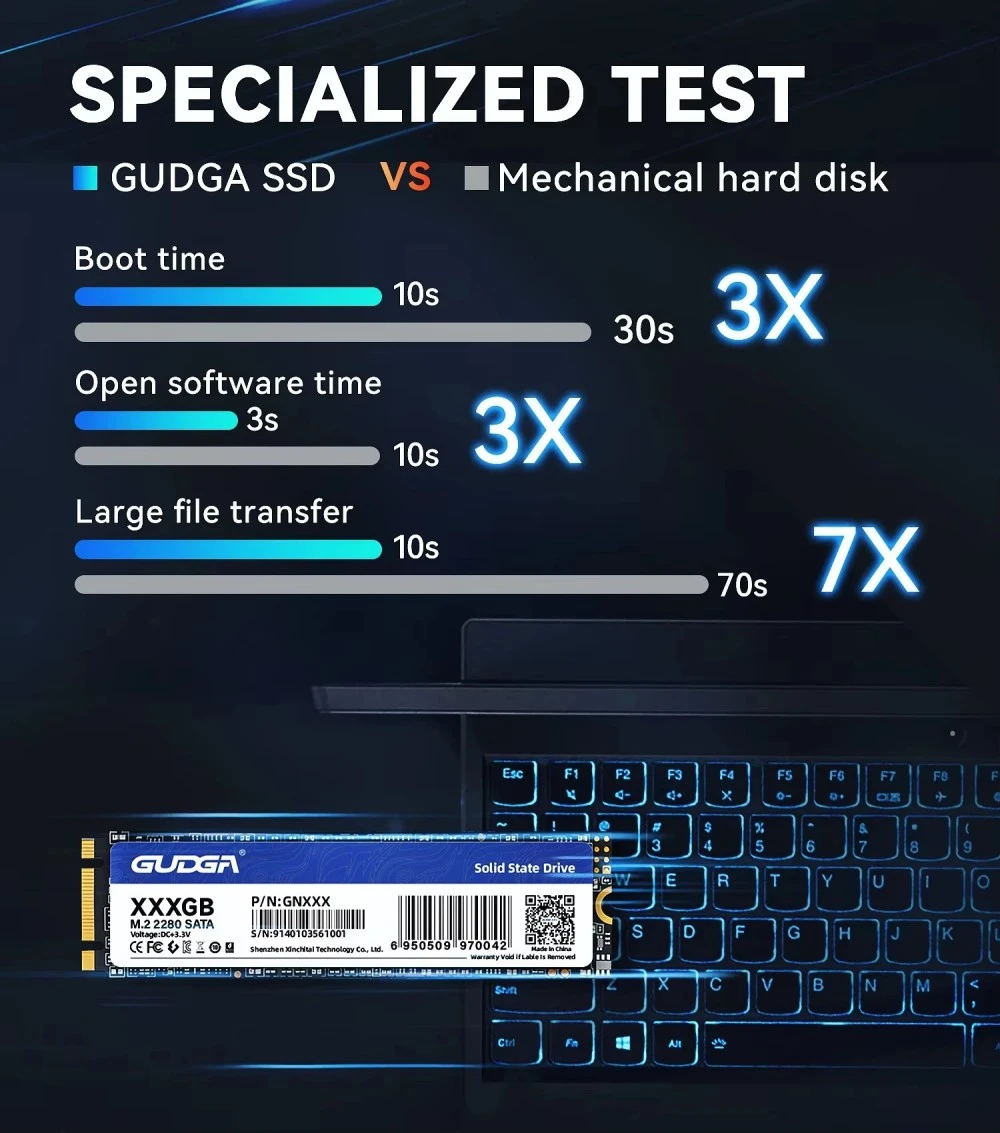
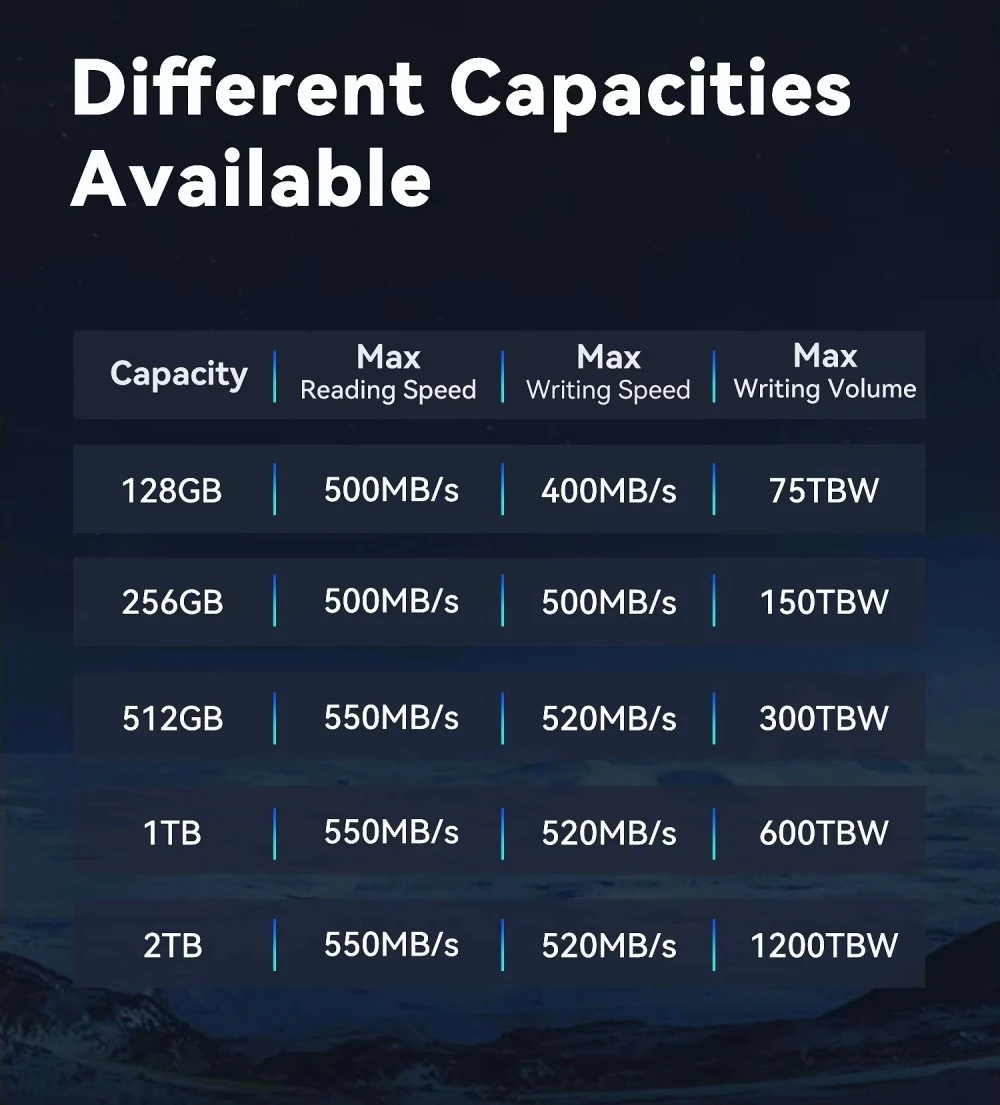
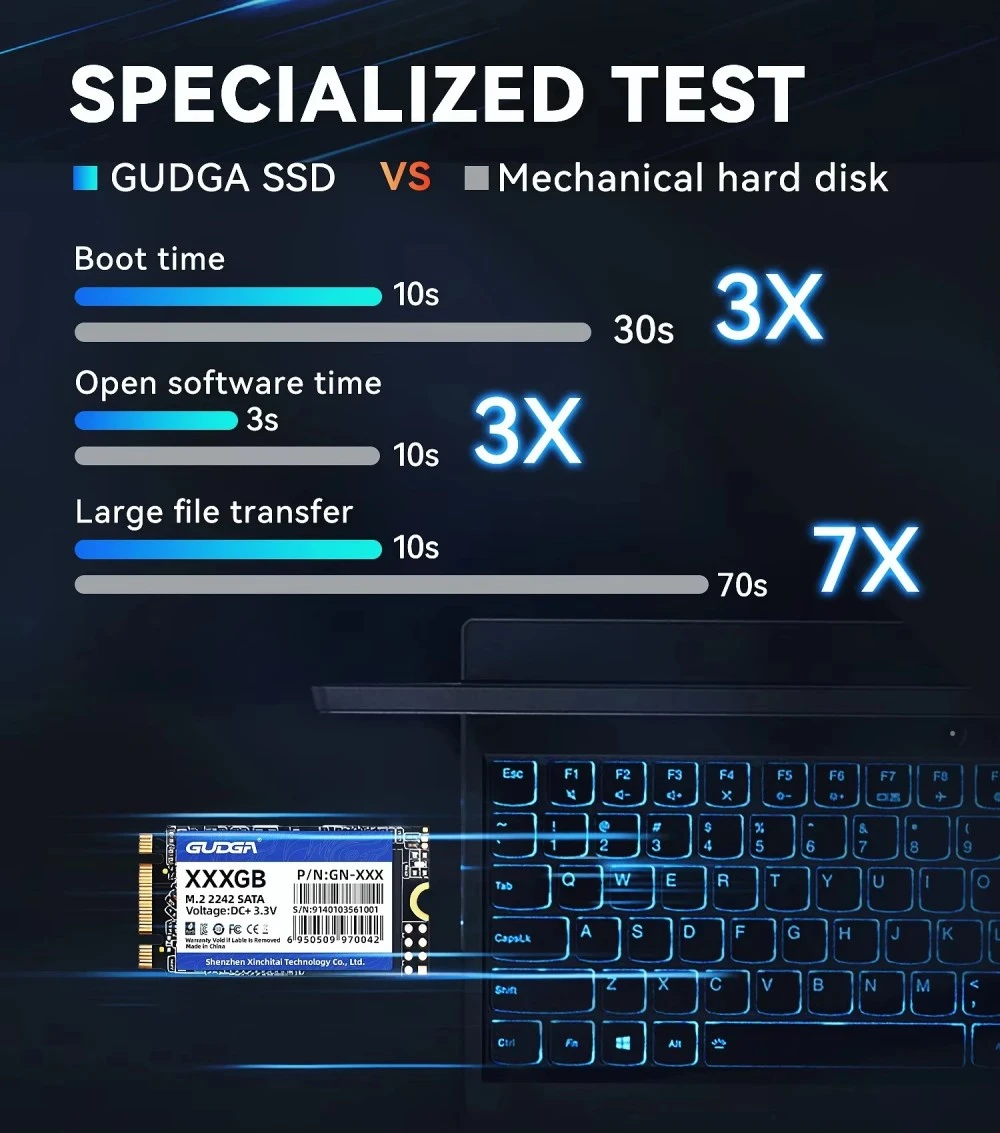
1. Supreme Read and Write Performance: Utilizing the standard SATA III 6Gbps high-speed protocol, the measured continuous read speed can reach up to 560MB/s, and the continuous write speed can reach up to 530MB/s. Compared to traditional mechanical hard drives, it speeds up by tens of times, which can shorten the boot time of outdated laptops from 2-3 minutes to within 15 seconds, significantly improving the efficiency of software startup, file transfer, and multi-tasking office work.
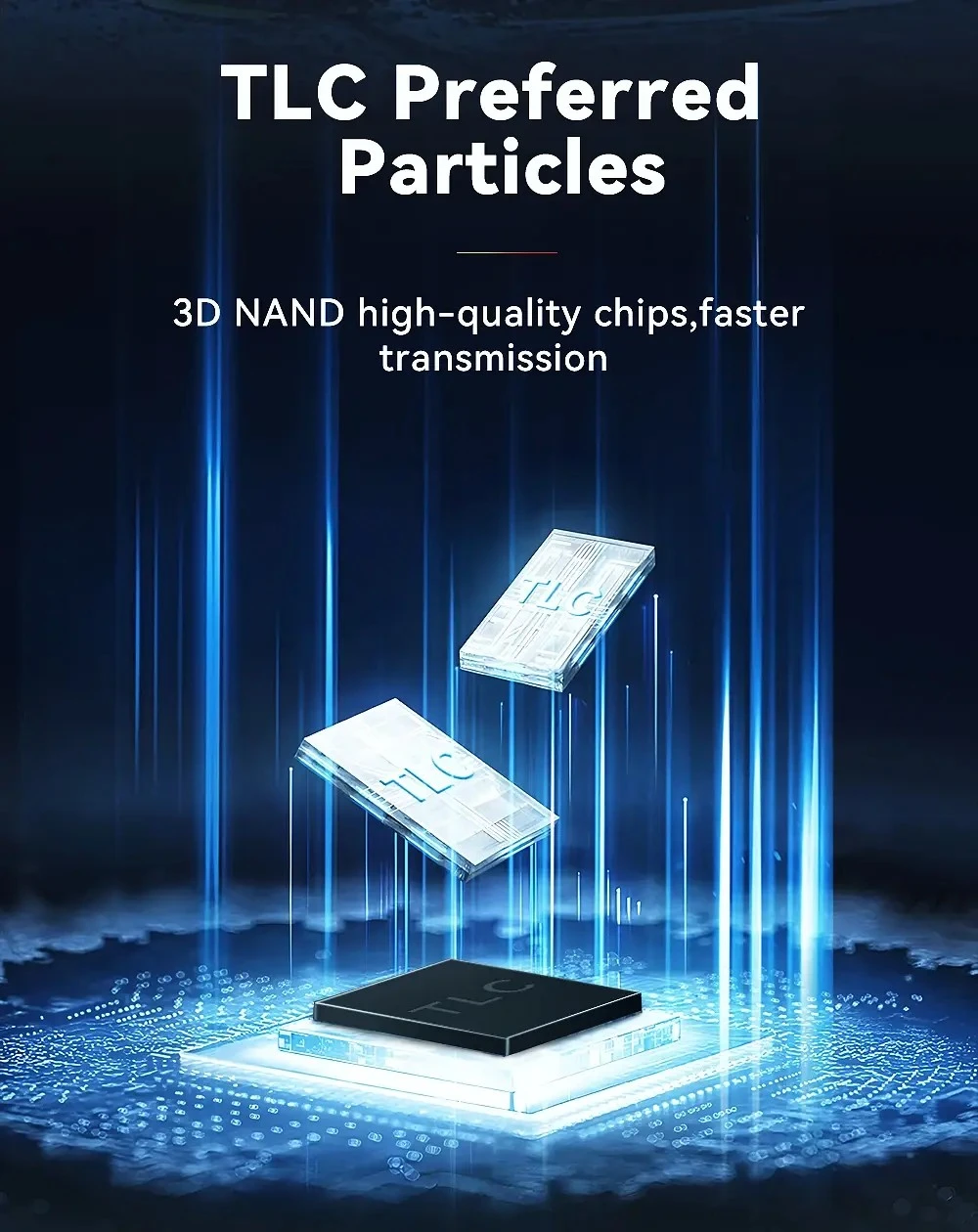
2. High-end Controller and Flash Memory Combination: Equipped with an 800MHz dual-core main control chip, it supports full-duplex high-speed transmission, and has an intelligent cache algorithm, controlling the read and write latency within 0.1ms, eliminating the performance slowdown problem during continuous large-capacity writing; paired with 16-layer stacked 3D NAND flash memory, the storage density is 40% higher than that of 8-layer chips, and the 1TB version has a TBW of up to 120TBW, far exceeding the industry average of 80TBW, making it more durable.
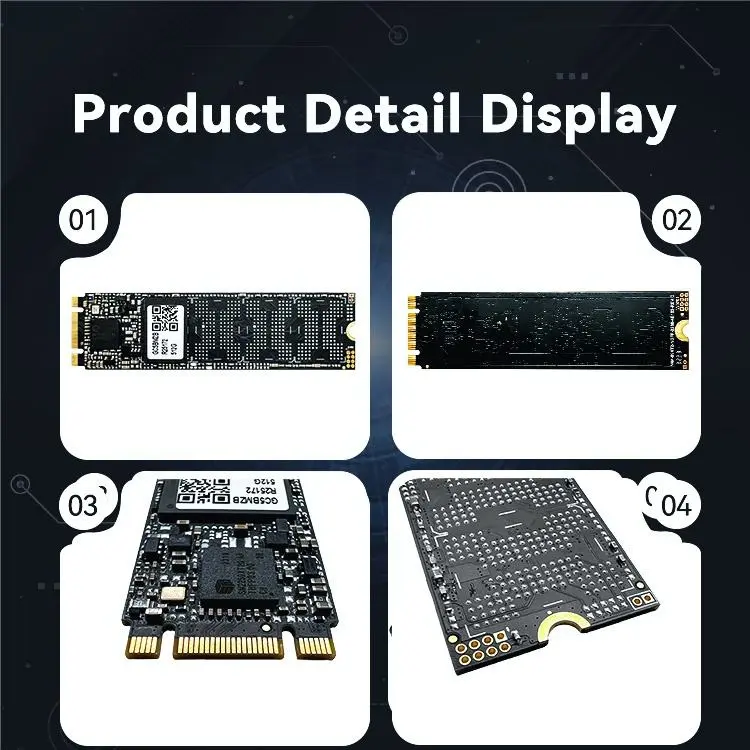
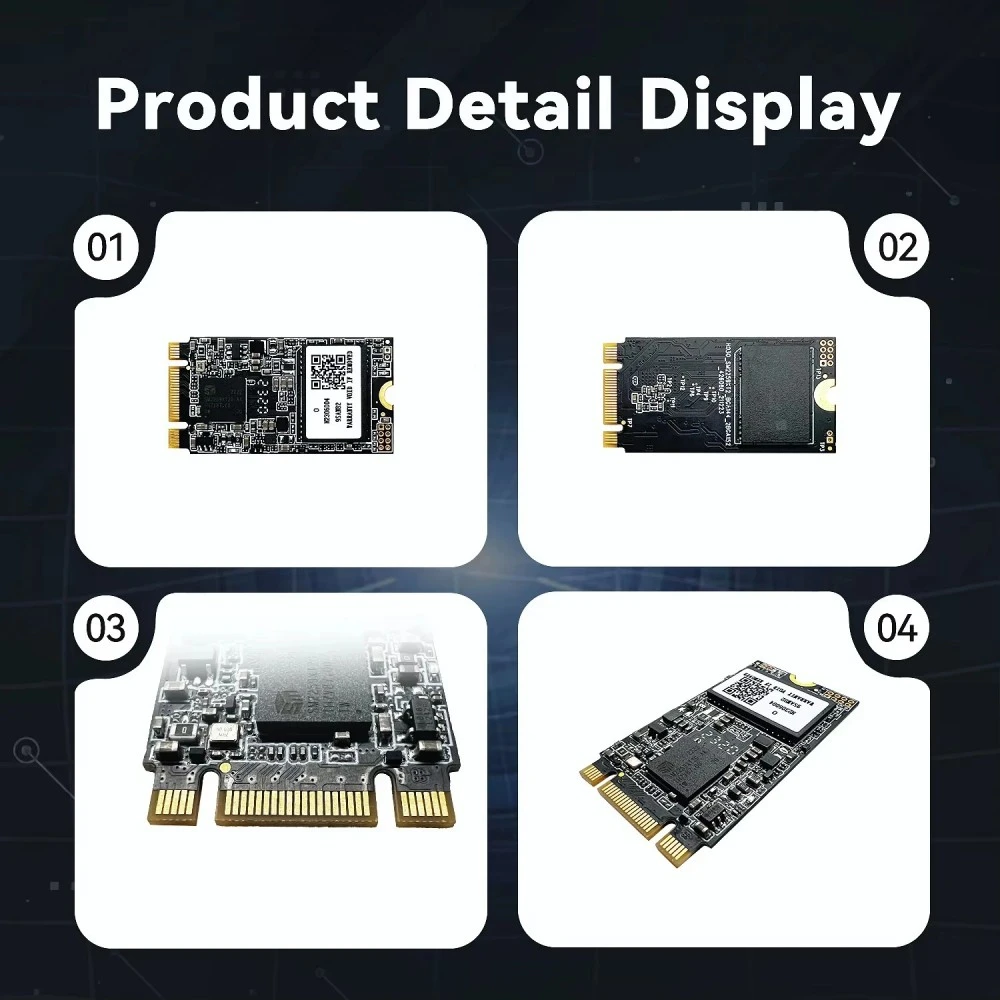
3. Stable Signal Transmission Architecture: Utilizing a five-layer gold-plated interface and differential signal line design, the signal crosstalk is reduced by 30%. Even in industrial complex interference environments, it can maintain uninterrupted data transmission and no packet loss, solving the common problem of poor contact and signal interruption in ordinary hard drives.
Multi-layer Protection Technology
Given the long-term uninterrupted operation and complex environment of office, monitoring, and industrial control equipment, we have equipped the M.2 2242 SATA SSD with multiple professional protection technologies to ensure long-term data security from multiple dimensions including error correction, bad block management, power supply, and encryption.
1. LDPC High-Precision Error Correction Technology: Supports 80-bit error correction for every 1KB of data, which can accurately repair transmission errors caused by flash memory wear, effectively reducing the probability of data corruption and file loss, and is suitable for scenarios of long-term reading and writing, continuous video recording, and high-frequency data storage.
2. Dynamic Bad Block Intelligent Management: The device can automatically scan, identify, and replace bad blocks, preventing blue screens, system crashes, and file damage caused by bad sectors in the hard drive in advance, ensuring the continuous and stable operation of the hard drive 24/7, and perfectly meeting the all-day recording requirements of monitoring equipment.
3. Power Failure Voltage Stabilization Protection Mechanism: Equipped with a multi-level power management system, it supports voltage fluctuations of ±5%, has a sudden power failure protection function, effectively solving data corruption and hard drive failures caused by unstable voltage in industrial sites and old equipment.
4. AES-256 Hardware Encryption Protection: Utilizes the underlying hardware encryption of the main control chip, does not occupy the CPU resources of the device, and the encryption and decryption speed is three times that of software encryption. It supports the TCG Opal 2.0 standard, preventing brute-force cracking and data leakage, and the encryption protection can still be retained after reinstalling the system, suitable for enterprise confidential and commercial data storage.
Ultra-low power consumption design
We have specifically optimized power consumption control to meet the energy-saving requirements of lightweight laptops, mini hosts, and embedded terminals. While ensuring performance, it effectively prolongs the device's battery life and reduces energy consumption.
1. Precise power consumption management: The operating power is as low as 2.6W, and the standby power is only 0.05W, far lower than that of ordinary solid-state drives. This significantly reduces the power consumption load of the device and is suitable for mobile battery life scenarios of laptops.
2. DevSleep intelligent power-saving mode: An exclusive low-power sleep mode, compared to ordinary SSDs, it saves 30% energy. Long-term deployment of mini hosts and office terminals can effectively reduce the electricity cost for enterprises. It is suitable for office equipment and industrial control terminals that run continuously.
3. Low heat and stable operation: The low-power architecture reduces heat generation from the root, avoiding the slowdown of the device due to overheating. It is suitable for enclosed and narrow internal environments of the device and can prevent performance degradation and hardware failures caused by high temperatures.
Ultra-small specification compatibility
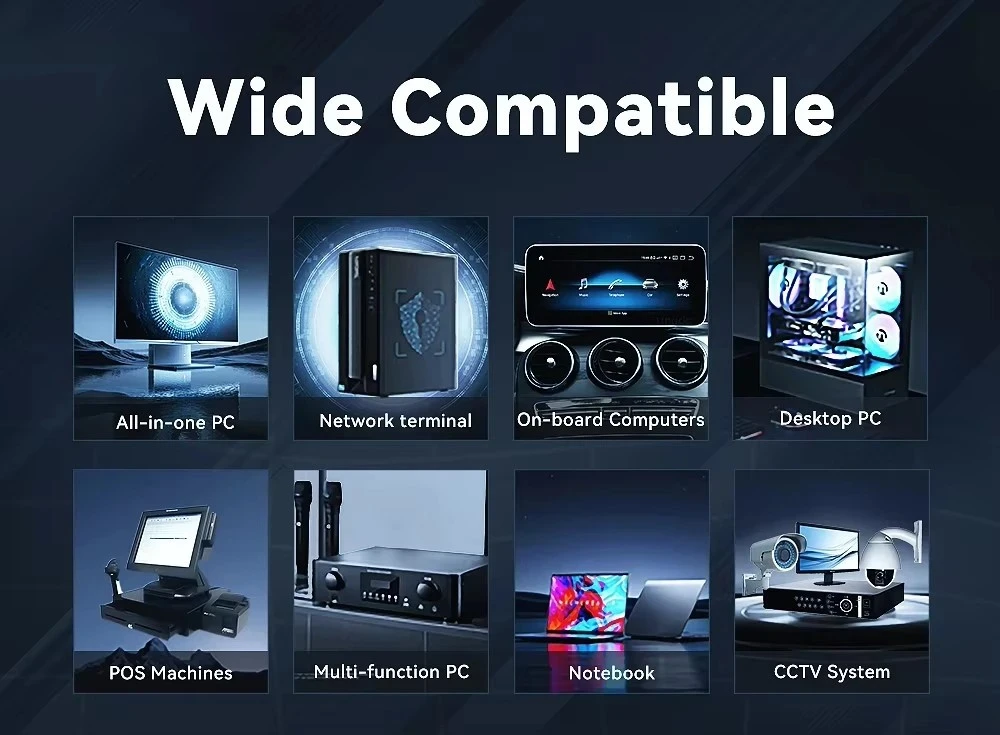
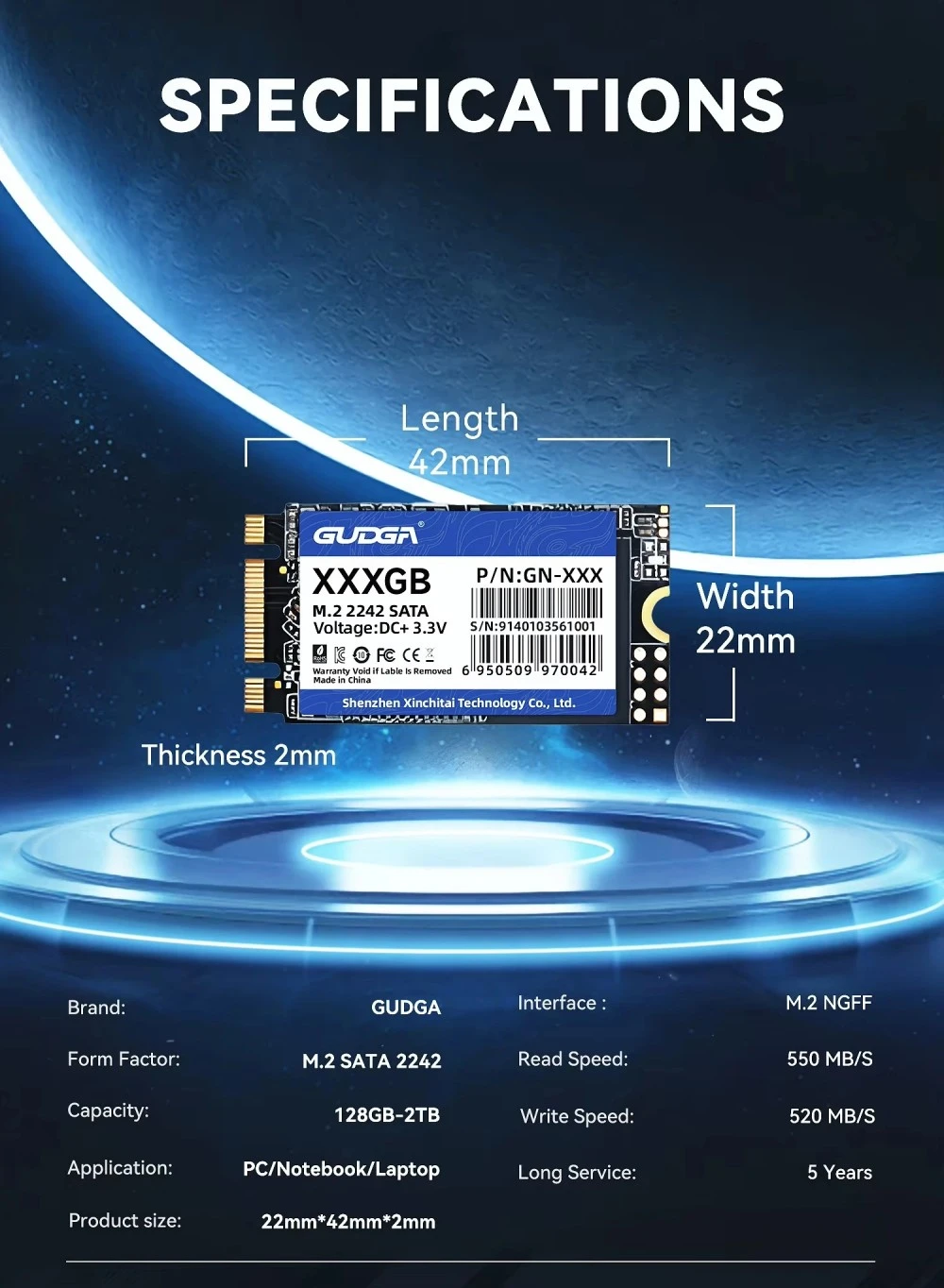
Based on the 22×42mm ultra-compact design, the M.2 2242 SATA SSD breaks through the limitations of traditional hard drive sizes, and is compatible with various devices with limited space, replacing old 2.5-inch SSDs and mechanical hard drives. It has extremely strong compatibility.
1. Exclusive upgrade for lightweight laptops: Perfectly compatible with ultra-thin models such as Lenovo ThinkPad X1 Nano and Dell XPS 13 9360. No need to modify the machine structure, directly replace the old hard drive to solve the problem of insufficient space and inability to expand in lightweight laptops.
2. Industrial equipment compatibility: With 50G anti-vibration capability and tolerance to regular voltage fluctuations, it can operate stably in factory embedded devices, industrial control terminals, and precision instruments, adapting to complex industrial environments.
3. Office and monitoring compatibility: Suitable for mini hosts and thin client batch installations, and also compatible with video monitoring terminals. Dynamic bad block detection technology ensures 24-hour uninterrupted video storage without data gaps.
Mature Quality Control Process
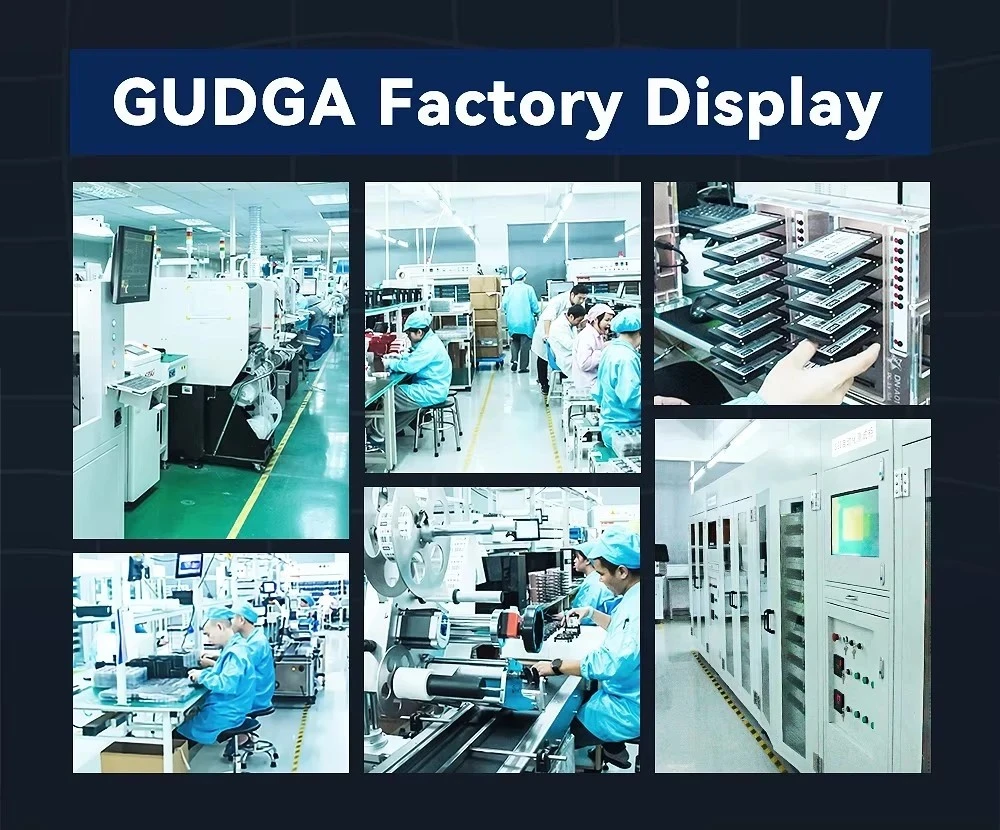
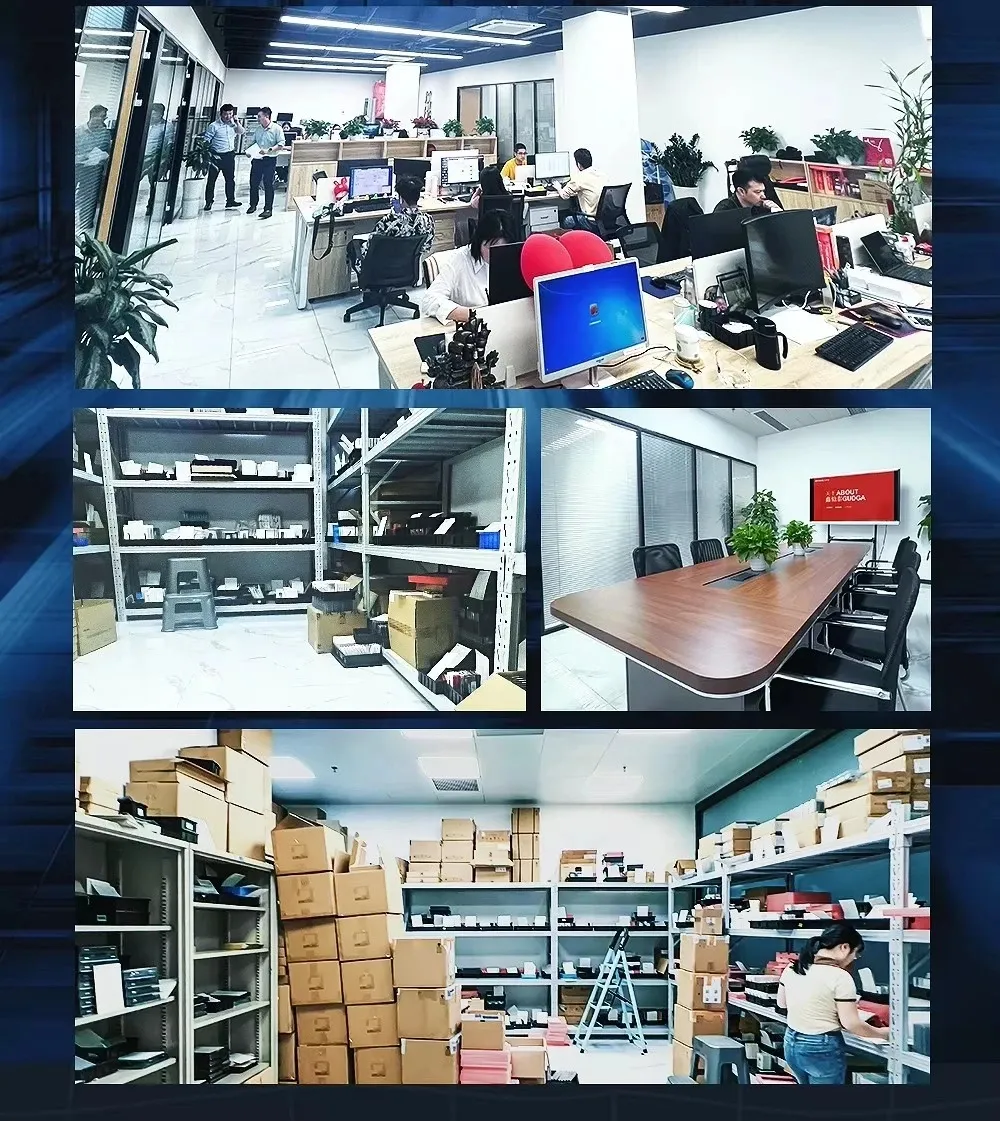
As the source factory, we strictly control the production process throughout the entire process. All M.2 2242 SATA SSD undergo multiple rigorous processes for polishing, ensuring uniform quality and low failure rate. They are suitable for batch purchases, project support, and long-term supply needs.
1. Ten-thousand times wear-resistant insertion and removal process: Five-layer thickened gold-plated interface, capable of withstanding over ten thousand insertion and removal operations without oxidation or contact issues, extending the lifespan of the equipment.
2. 48-hour full-load aging test: All finished products undergo 48-hour dynamic full disk testing before leaving the factory. Automatic repair of hidden bad sectors is performed, defective products are screened out, ensuring that each hard drive meets the quality standards upon leaving the factory.
3. Fixed 7% over-provisioning design: Pre-set 7% fixed excess space at the factory for dynamic bad sector replacement, SLC cache supplementation, and stable firmware operation, providing long-term guarantee for the performance of the hard drive without degradation, and avoiding slowdown or freezing during long-term use.
4. Full system driver-free compatibility: Compatible with all versions of Windows, Linux, Unix and other mainstream systems. Plug and play without the need for additional driver installation, reducing the labor cost for batch installations and equipment upgrades.
FAQ
Q1: After installing the old notebook, the actual speed fails to reach the nominal value. What are the reasons for this and how can it be solved?
A1: This problem mainly stems from the bandwidth limitation of the old hardware and the issue of BIOS settings. Devices from before 2018 often come with SATA II 3Gbps controllers, whose bandwidth is only half of SATA III, which limits the performance release of the hard drive; in addition, if the BIOS does not enable the AHCI mode, the speed will be restricted. The solution: prioritize enabling the AHCI mode in the BIOS and confirm that the motherboard of the device supports the SATA III 6Gbps protocol, so as to maximize the nominal performance of the hard drive.
Q2: Can the DevSleep power-saving mode be turned off? What are the respective usage scenarios for the switch mode?
A2: This mode can be manually turned off through the computer power settings or dedicated SSD tools. When enabled, the standby power consumption of the hard drive is ≤ 0.03W, and the standby battery life of the laptop can be improved by 10%-15%, which is suitable for mobile lightweight laptops; when turned off, the standby power consumption rises to 0.08W, but the disk wake-up delay is reduced by 0.5ms, resulting in faster response speed, which is suitable for industrial control equipment, fixed desktop mini hosts, etc., which do not focus on battery life but pursue fast response speed.
Q3: What is the difference between hardware encryption and software encryption? Is there a risk of data loss when enabling hardware encryption?
A3: The AES-256 hardware encryption of this product is run by the main control chip at the bottom layer, which does not occupy the CPU resources of the device, and the encryption and decryption speed is three times that of software encryption. It supports hardware-level anti-cracking and is not affected by system reinstallation, and its security is much higher than software encryption. Normal use without data loss risk, but when the encryption password is modified forcibly through a third-party tool, it will directly damage the underlying firmware of the hard drive, causing abnormal bad block detection, TBW write life shrinking by more than 40%, frequent disk detachment, lag, and non-identification, and in severe cases, it will be directly scrapped. Therefore, it is not recommended to modify privately.
Q4: Will forcibly modifying the 7% excess configuration rate cause any irreversible damage to the hard drive?
A4: 7% fixed excess configuration is a long-term stable mechanism designed based on flash memory characteristics, used for bad block replacement, cache supplementation, and firmware operation. Forcing modification through a third-party tool will directly damage the underlying firmware of the hard drive, resulting in abnormal bad block detection, TBW write life shrinking by more than 40%, frequent disk detachment, lag, and non-identification, and in severe cases, it will be scrapped. Therefore, it is not recommended to modify privately.
Q5: Can it be used in high-humidity coastal factory environments? What protective measures need to be taken?
A5: M.2 2242 SATA SSD has a normal working humidity range of 5%-95% without condensation. It can be adapted to ordinary high-humidity scenarios. However, coastal salt fog and temperature difference condensation environments will corrode the hardware, so protective measures need to be taken: use a waterproof and dustproof enclosure to isolate salt fog, regularly wipe the body, and avoid long-term temperature difference condensation environments. At the same time, salt spray corrosion and damage caused by human factors are not covered by the 5-year warranty. For industrial special scenarios, appropriate protective measures and adaptations should be taken in advance.
Hot Tags: M.2 2242 SATA SSD, Manufacturer, Supplier, Quality, Wholesale
Whether you need sample testing or bulk wholesale of M.2 NVME SSD, M.2 SATA SSD and Random Access Memory, you can submit demands here to obtain professional one-stop procurement solutions from GUDGA.
We use cookies to offer you a better browsing experience, analyze site traffic and personalize content. By using this site, you agree to our use of cookies.Privacy Policy